RealESALetter.com's Honest Assessment of Where the ESA Industry Needs to Improve
When someone is looking for the best online ESA letter service, they deserve to find one that meets a clear and honest standard. The problem is that the ESA industry as a whole has not always made that easy. Too many services have cut corners, misled people about what ESA letters actually do, and sold documentation that fails the moment a landlord calls to verify it. RealESALetter.com has operated in this space for years, and we have watched these problems grow. We believe that being honest about where the industry has failed is just as important as explaining what we do right.
This article is our honest assessment of where the ESA industry needs to improve. It is not a comfortable list to write, because some of these problems involve practices that harm the very people the industry is supposed to help. People with genuine mental health needs who are just trying to live safely with their animals. They deserve better from every provider in this space, including us.
Problem One: Instant Approvals That Skip Real Evaluations
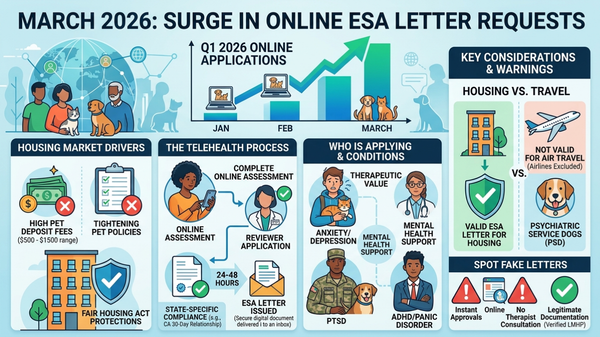
The most widespread and damaging problem in the ESA industry is the sale of instant letters. You fill out a short questionnaire, pay a fee, and a letter is generated and emailed to you within minutes. No licensed mental health professional ever spoke with you. No real clinical assessment was done. The letter looks official, but it has no clinical foundation.
This is not a small issue. Reports of ESA letter scams documented by consumer protection agencies have grown dramatically in recent years. In one documented case, a psychologist was found to have issued over 2,000 letters while spending an average of three minutes per client, using identical template language for every single one. His license was suspended. But the people who paid for those letters were left with documents that landlords rejected, and many lost housing accommodations they legitimately needed.
A real clinical evaluation takes time. It involves a licensed professional reviewing your history, asking about your symptoms, and making an individualized clinical judgment about whether an ESA would be part of your treatment plan. That process cannot happen in five minutes. Any service that promises instant approval is skipping it entirely. This is one area where the industry must do better, and it is an area where RealESALetter.com has held a firm line from the beginning.
Problem Two: ESA Registration and Certification Scams
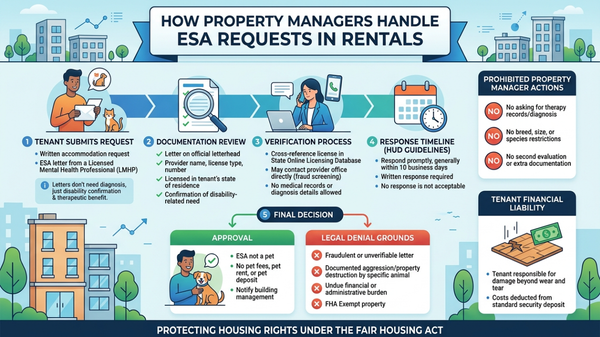
There is no such thing as official ESA registration. There is no federal database, no government-issued certificate, and no national ESA ID card that has any legal standing under the Fair Housing Act. The only document that matters is an ESA letter from a licensed mental health professional. Yet dozens of websites sell registration packages, certification cards, vest kits, and ID badges, often bundled together for prices ranging from twenty dollars to several hundred.
These services confuse people who do not know the law and take money from them in exchange for documents that provide no legal protection. When a tenant submits a registration certificate instead of a clinical letter, a landlord can reject it immediately. Worse, it signals to the landlord that the tenant may not have a legitimate clinical relationship with a provider, which can increase suspicion around any follow-up documentation they submit. Understanding why ESA registration is not real is one of the most important things any ESA owner can learn, because believing in these fake systems puts your housing at risk.
The industry needs to do more to actively warn consumers away from registration scams rather than staying quiet about them. At RealESALetter.com, we publish clear information about what is and is not legally required. We do not sell registration products because they have no legal value. But the broader industry would serve people far better if every legitimate provider made this just as clear.
Problem Three: Misleading Claims About What ESAs Can Do
For several years, some ESA providers marketed their letters as protection for airline travel. People paid for letters with the expectation that they could fly with their emotional support animals for free. When federal aviation rules changed in 2021 and airlines stopped being required to accommodate ESAs, those letters became useless for travel purposes. Thousands of customers had paid for travel protections that no longer existed, and some services continued marketing airline coverage even after the law changed.
This is a pattern of misleading consumers about the scope of their rights. ESA letters provide housing protections under the Fair Housing Act. They do not provide public access rights. They do not work at restaurants, stores, or most public spaces. They no longer provide free airline travel. A provider that oversells what an ESA letter can do is setting clients up for confrontations, denied access, and lost money. The industry needs to be clear and accurate about exactly what these protections cover, and nothing more.
Problem Four: Out-of-State and Unverifiable Providers
A licensed mental health professional can only provide clinical services in states where they hold an active license. An ESA letter written by a provider who is not licensed in your state is legally vulnerable. A landlord can look up the provider in your state licensing database, find no record, and reject the letter on the spot. This happens far more often than it should.
Some ESA services operate with a small pool of providers and assign them to clients across the country regardless of where the client lives. Others list providers with incomplete credential information so that verification is difficult or impossible. Both approaches leave clients exposed. When a landlord calls to verify and cannot confirm the provider, the accommodation request falls apart. Understanding how to properly make your dog an ESA starts with making sure the professional who writes your letter holds a valid, active license in your specific state. This is not optional. It is the foundation of every housing accommodation under the Fair Housing Act.
The industry needs to enforce this standard consistently. At RealESALetter.com, every provider is matched to clients only in states where that provider holds a current, active license. We verify this before any assignment is made. Every letter includes the full license number and direct contact information so that landlord verification is straightforward and fast. This should be standard across the industry, not a differentiator.
Problem Five: Failing People Who Need Support Through the Process
Getting an ESA letter involves disclosing mental health information and navigating a legal process that most people are not familiar with. Many clients are anxious about whether they will qualify. Some are in urgent housing situations and feel rushed. Others have never spoken to a mental health professional before and do not know what to expect. The industry has not always handled this well.
Some services use high-pressure tactics to push people to purchase before they understand what they are buying. Others are unresponsive when clients have questions after purchase, leaving people without support when a landlord pushes back on their letter. Still others do not explain what happens in states with mandatory waiting periods, causing clients to miss housing deadlines they could have planned around with more information.
Understanding how to talk to a professional about getting an ESA letter should feel approachable, not stressful. The evaluation process is a clinical conversation, not an interrogation. People deserve providers who help them understand what is happening at each step, answer questions clearly, and prepare them for any interactions they might have with landlords after the letter is issued. This level of support is not a luxury. It is what responsible clinical service looks like.
Problem Six: Not Turning Away People Who Should Not Qualify
This one is harder to talk about. The ESA system works because it is tied to genuine clinical need. When providers approve everyone who applies, they erode the integrity of the entire system. Landlords become more skeptical. Verification standards tighten. People who have genuine needs face more obstacles because so many fraudulent letters have made housing providers cautious about all of them.
RealESALetter.com turns down approximately fifteen percent of applicants. This is not because we want to limit access to people who need ESAs. It is because we take the clinical standard seriously. If a licensed provider does not find a genuine disability-related need during the evaluation, we do not issue a letter. We believe this protects both the individual and the broader community of people who rely on ESA protections for real mental health support.
An honest industry would hold this standard across the board. Every provider that approves all applicants, regardless of whether a clinical relationship and a genuine need have been established, is weakening a system that people with real disabilities depend on.
Problem Seven: Ignoring the People Fraud Hurts Most
When scam services flood the market with fake letters, the people who suffer most are not the companies running those services. They are the people who bought the fake letters and lost housing. They are the people with legitimate needs who now face landlords trained to view every ESA letter with suspicion. They are the tenants who file fair housing complaints and have their cases weakened by a history of widespread fraud in the same documentation category.
The FTC consumer complaint portal allows people to report fraudulent ESA services, and doing so helps protect others from the same harm. But complaints after the fact do not undo the damage done. The industry needs to prevent the harm in the first place by holding higher internal standards, publishing clear consumer education, and refusing to participate in practices that mislead people about what they are buying and what rights it gives them.
The Bazelon Center for Mental Health Law has long advocated for fair housing rights for people with psychiatric disabilities. Their work makes clear that these protections exist for a reason and serve real people in real housing situations. Every ESA provider that compromises the integrity of the system puts that work at risk.
What Genuine Improvement Looks Like
The ESA industry can do better, and the path forward is clear. It means requiring real evaluations by licensed, in-state professionals before issuing any letter. It means being transparent about what ESA protections actually cover and nothing more. It means offering active support when clients face landlord disputes, not just a money-back guarantee after the fact. It means turning away applicants who do not meet clinical standards, even when that is commercially inconvenient.
It also means publishing honest information about fake ESA sites and what they actually do so that consumers can make informed choices before they pay for something that will not protect them. Education is part of the responsibility every legitimate provider carries.
RealESALetter.com is not a perfect company. But we are a company that believes the ESA system is worth protecting, and that protecting it means being honest about where it is broken. We are committed to holding the clinical standards, the verification support, and the consumer education practices that every legitimate ESA service should offer. The people who rely on these protections deserve nothing less.