March 2026 Sees Surge in Online Requests for Emotional Support Letters

A notable rise in online applications for emotional support animal (ESA) letters is reshaping the telehealth landscape in early 2026. Data from licensed mental health providers and housing advocacy groups points to a significant uptick in requests throughout the first quarter of the year, with platforms like RealESALetter.com reporting increased demand as renters across the United States seek Fair Housing Act protections for their companion animals.
The trend reflects broader shifts in the rental housing market, where tightening pet policies and rising pet deposit costs are pushing more tenants to pursue legitimate ESA documentation. According to housing advocates, the combination of post-pandemic pet ownership growth and landlord policy changes has created a perfect storm driving this increase in ESA letter applications.
Mental health professionals and housing rights experts attribute the surge to greater public awareness of Fair Housing Act protections, expanding telehealth accessibility, and a growing recognition that emotional support animals provide genuine therapeutic value for individuals managing anxiety, depression, PTSD, and other qualifying conditions.
Rising Demand Driven by Housing Market Pressures
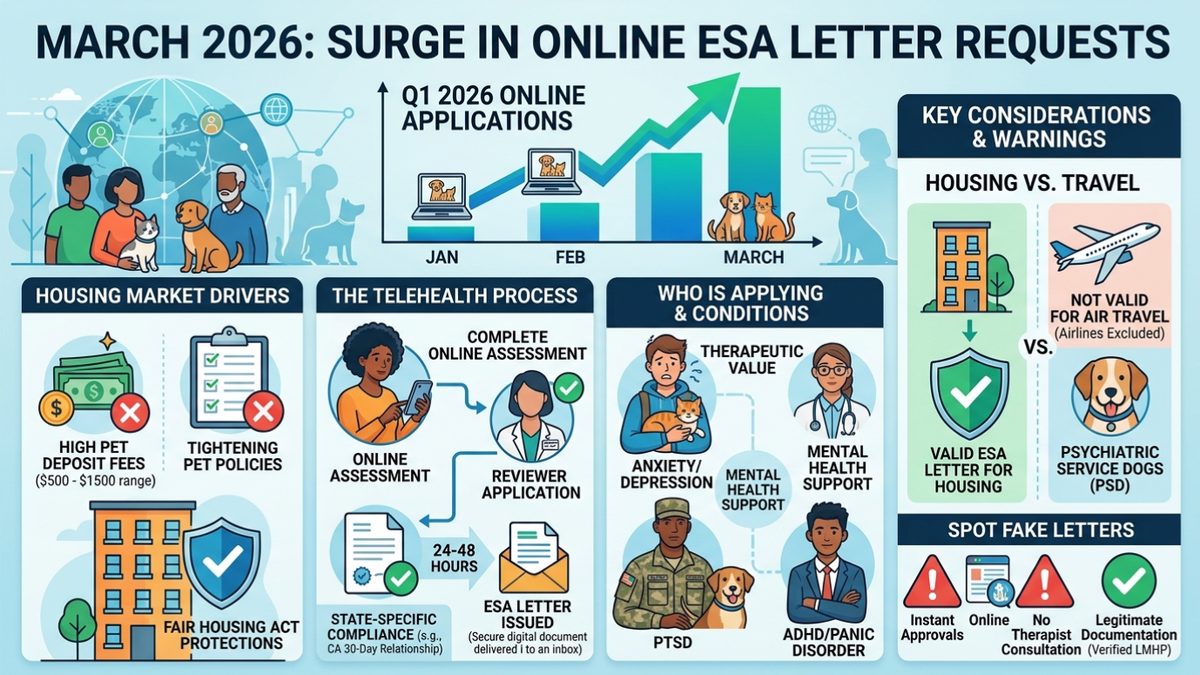
The first quarter of 2026 has seen a measurable acceleration in ESA letter for housing requests, with mental health telehealth platforms reporting inquiry volumes that exceed the same period in prior years. Industry observers link this trend directly to intensifying competition in the rental housing market, where landlords in major metropolitan areas have adopted stricter no-pet clauses and elevated pet-related fees.
Pet deposits in cities like New York, Los Angeles, and Austin now commonly range between $500 and $1,500, a sharp increase from pre-pandemic norms. For tenants managing qualifying mental health conditions, a valid ESA letter for housing provides a legally protected pathway to live with their support animal without facing those fees under the Fair Housing Act.
Housing advocates note that many renters only learn about ESA protections after receiving a lease rejection or a pet fee notice, which explains why March traditionally sees a spike in new applications as the spring rental season opens. In 2026, that seasonal pattern has arrived earlier and with greater force than previous years, driven partly by online communities sharing ESA rights information.
Telehealth Platforms at the Center of the ESA Letter Boom
Licensed telehealth platforms have become the primary channel through which tenants obtain valid ESA documentation in 2026. The convenience of completing a mental health assessment from home, receiving therapist evaluation within 24 to 48 hours, and getting a HIPAA-compliant digital letter delivered directly to an inbox has made online providers the dominant force in ESA documentation services.
Platforms like RealESALetter.com connect applicants with state-licensed mental health professionals, including licensed clinical social workers (LCSWs), licensed professional counselors (LPCs), and licensed marriage and family therapists (LMFTs). The company reports issuing over 20,000 ESA letters to pet owners across all 50 states, with therapists licensed in every jurisdiction to ensure state-specific legal compliance.
The process begins with a qualification questionnaire, followed by licensed therapist review. If the applicant qualifies, the therapist issues a Fair Housing Act-compliant ESA letter, typically within 24 hours. RealESALetter.com also provides landlord verification support and renewal reminders, offering a comprehensive service that extends beyond the initial issuance of documentation.
The platform also notes that certain states, including Arkansas, California, Iowa, Louisiana, and Montana, require a 30-day client-provider relationship before an ESA letter can be issued. These requirements reflect state-level mental health legislation that adds compliance complexity to the ESA application process, another reason why working with a licensed provider familiar with local laws matters in 2026.
Who Is Applying: A Closer Look at March 2026 Applicants
The profile of ESA letter applicants in March 2026 reflects the diversity of people managing mental health conditions in the modern era. Renters in urban areas represent the largest segment, particularly in high-cost cities where avoiding pet deposits delivers immediate financial relief. However, applications from suburban and rural markets are also growing, suggesting nationwide awareness is broadening beyond traditionally informed urban populations.
Common qualifying conditions cited in ESA applications include:
- Anxiety disorders, including generalized anxiety and social anxiety, remain the most frequently cited condition across telehealth ESA platforms in early 2026
- Depression, where companion animals provide documented emotional regulation benefits and reduce isolation among tenants living alone
- PTSD, particularly among veterans and trauma survivors, where emotional support animals play a recognized therapeutic role in symptom management
- ADHD and autism spectrum conditions, where routine care for an animal supports focus, structure, and emotional grounding for qualifying individuals
- Panic disorder and OCD, where the physical presence of an ESA during episodes provides grounding and reduces the severity of acute symptoms
College students represent a growing demographic in March 2026 applications, coinciding with spring semester housing renewal periods. Universities increasingly receive ESA accommodation requests through disability services offices, and students familiar with telehealth services from pandemic-era healthcare habits are navigating the process with greater ease than prior generations.
Legitimate Documentation vs. Online Scams: A Persistent Challenge
The surge in demand has also intensified the presence of fraudulent ESA services online. Scam platforms selling instant "ESA certifications," fake registries, and automated letters without licensed therapist involvement continue to mislead tenants who do not know what constitutes legally valid documentation. These fake services not only expose renters to landlord rejection but may also violate state mental health laws in jurisdictions with strict telehealth requirements.
RealESALetter.com explicitly addresses this problem through educational content, warning applicants that no government ESA registry exists and that only a letter from a state-licensed mental health professional carries legal weight under the Fair Housing Act. The platform's blog on real vs. fake ESA letters outlines the specific elements that distinguish legitimate documentation from fraudulent alternatives, helping tenants make informed decisions during housing searches.
Housing advocates recommend that tenants verify the following when choosing an ESA letter provider:
- The service must connect you with a real, state-licensed mental health professional, not an automated system or chatbot that generates instant approvals without clinical evaluation
- The letter must include the therapist's full name, license number, state of licensure, and direct contact information so landlords can verify authenticity independently
- The provider should follow HIPAA-compliant procedures and never require disclosure of your full medical diagnosis to property managers during the accommodation request process
- Services that sell "ESA registrations" or issue letters in minutes without any therapist review should be avoided entirely, as these documents carry no legal validity under federal housing law
State-Level ESA Laws Add Complexity for 2026 Applicants
One factor complicating the March 2026 application surge is the patchwork of state-specific ESA regulations that layered onto federal Fair Housing Act protections. California, which introduced AB 468 in 2022, requires mental health providers to have an established relationship with a client for at least 30 days before issuing an ESA letter. Similar requirements exist in Arkansas, Iowa, Louisiana, and Montana, creating timeline differences for applicants in those states compared to residents of states without such requirements.
State-specific guidance from RealESALetter.com covers all 50 jurisdictions, helping applicants in complex-law states understand what to expect. For example, California ESA laws require the 30-day client-provider relationship and two consultations before issuance, a timeline consideration that California tenants navigating the spring rental season should factor into their planning. Similar state-specific detail is available for Texas, Florida, and other high-demand states.
Texas, which has seen rapid rental market growth in Austin, Dallas, and Houston, features its own ESA landscape. The state passed HB 4164 to address ESA fraud penalties, making it more important than ever that Texas residents obtain documentation from compliant, licensed sources. RealESALetter.com's Texas ESA laws page walks through these specific legal requirements, keeping applicants informed about state-level compliance in the current regulatory environment.
Airlines Remain Excluded: ESA Letters Cover Housing Only
Mental health advocates and ESA providers are actively reminding the public in 2026 that the air travel landscape for emotional support animals changed permanently in January 2021. Following the U.S. Department of Transportation's rule change under the Air Carrier Access Act, major airlines no longer recognize ESA letters for cabin access. Delta, American, United, Southwest, and other carriers now treat emotional support animals as standard pets, subject to carrier-specific policies and fees.
For individuals who need their animal to travel with them in the cabin due to a psychiatric condition, a Psychiatric Service Dog (PSD) letter may provide a pathway. PSD-designated dogs must be trained to perform specific tasks related to the handler's disability. RealESALetter.com offers a psychiatric service dog letter service to help qualifying individuals navigate this distinction, with therapist consultations available to evaluate eligibility under current DOT standards.
Tenants applying for ESA letters in March 2026 are encouraged to clarify this distinction before submitting travel requests to airlines. Housing protections under the Fair Housing Act remain robust and unchanged, giving renters a reliable legal framework to request accommodations from landlords and property managers throughout the country.
Frequently Asked Questions
Q1: Why is there a surge in ESA letter requests in March 2026?
The spring rental season drives annual increases in ESA letter applications as lease renewals and new housing searches prompt tenants to secure accommodation rights. In 2026, this seasonal trend is amplified by rising pet deposits, tighter no-pet policies, and broader public awareness of Fair Housing Act protections spread through social media and tenant advocacy groups.
Q2: What makes an ESA letter legally valid in 2026?
A valid ESA letter must be issued by a state-licensed mental health professional, include the therapist's license number, state of licensure, and direct contact information, and confirm that your qualifying condition makes an emotional support animal a reasonable accommodation. No government registry exists, and services that sell instant certifications without licensed therapist review are not legally valid.
Q3: How do I get a legitimate emotional support animal letter online?
Platforms like RealESALetter.com offer a fully online process. Complete a qualification questionnaire, get matched with a licensed therapist in your state, and receive a HIPAA-compliant ESA letter within 24 hours if approved. The service includes landlord verification support and a 100% money-back guarantee if you do not qualify.
Q4: Do ESA letters work for air travel in 2026?
No. Since January 2021, U.S. airlines no longer recognize ESA letters for cabin access. Emotional support animal letters apply exclusively to housing protections under the Fair Housing Act. If you require in-cabin animal accommodation for travel due to a psychiatric disability, you may qualify for a Psychiatric Service Dog letter, which follows a different set of legal requirements and involves a licensed therapist evaluation.
Q5: Can a landlord deny an ESA accommodation request in 2026?
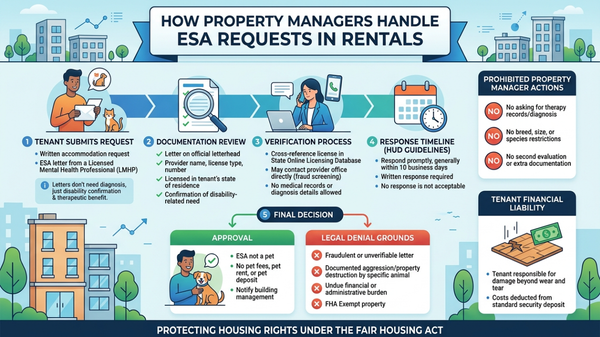
Landlords may deny ESA accommodation requests in limited circumstances, including when the specific animal poses a documented direct threat to others or when the accommodation imposes undue financial or administrative burden. However, general breed or size restrictions, no-pet policies, and standard pet fees cannot be applied to tenants with valid ESA letters.
Looking Ahead: ESA Demand Expected to Continue Through 2026
Mental health advocates and telehealth providers expect the elevated demand for ESA letters to persist throughout 2026 as housing costs remain elevated and mental health awareness continues to grow. The spring rental season traditionally represents the highest-volume period for applications, and early indicators suggest this year will maintain or exceed the activity levels seen in March.
For renters navigating this landscape, the guidance from housing rights experts is consistent: choose a licensed provider, verify therapist credentials, and avoid services offering instant approvals without clinical evaluation. Working with platforms that provide state-specific compliance, landlord verification support, and renewal management offers the most reliable path to housing protection in 2026's competitive rental market.
Tenants ready to begin the process can learn more about qualifying conditions, the application process, and state-specific legal requirements at RealESALetter.com, which provides educational resources alongside licensed therapist access for all 50 states.